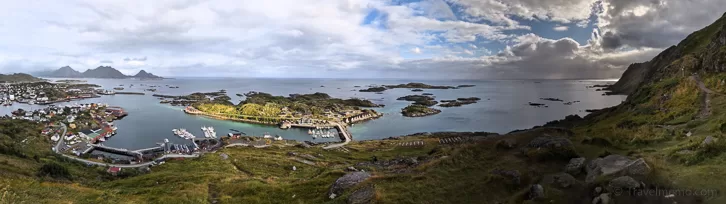
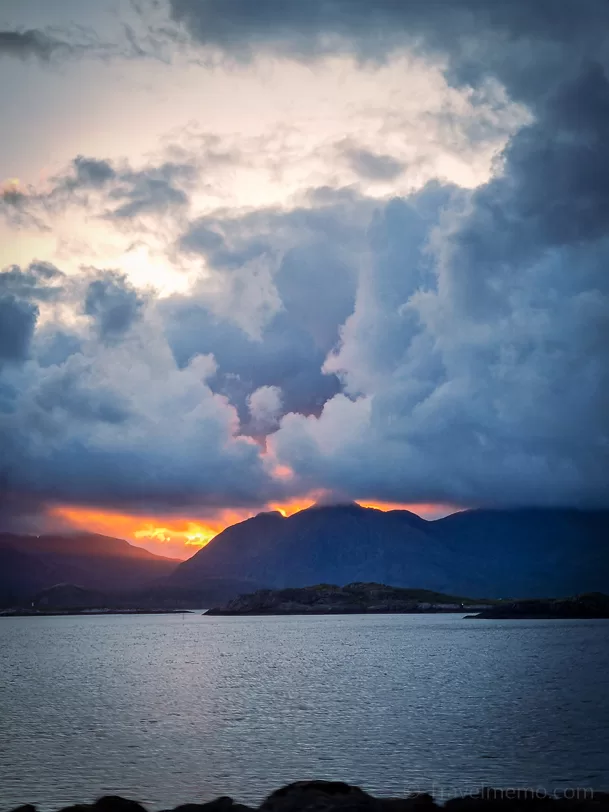
The Lofoten Islands are a Norwegian archipelago north of the Arctic Circle. Here, dramatic mountain peaks rise directly out of the sea.
Colorful fishermen’s huts stand on stilts in idyllic harbors, and the wind and weather are so changeable that you can sometimes experience (almost) all four seasons in an hour.
At the end of August, Walter and I are spending a week in Lofoten with our blog advisors Gabi and Alex.
Although it’s supposed to be summer, the weather is not on our side.
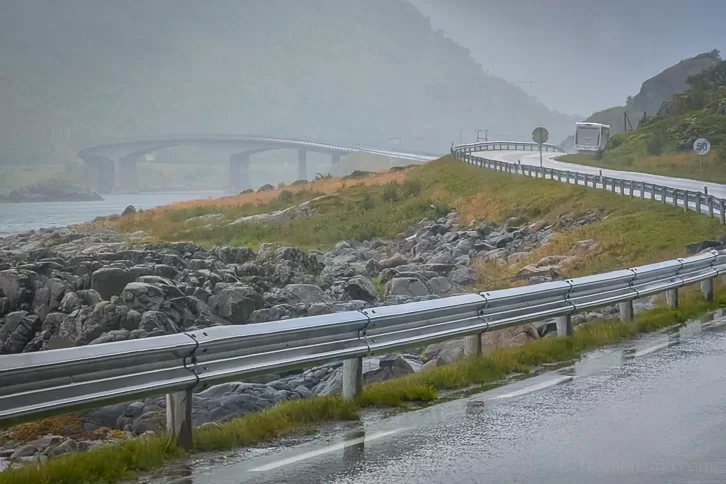
Let’s just say that the sun is nowhere to be seen. Instead, there is rain, clouds, and more rain.
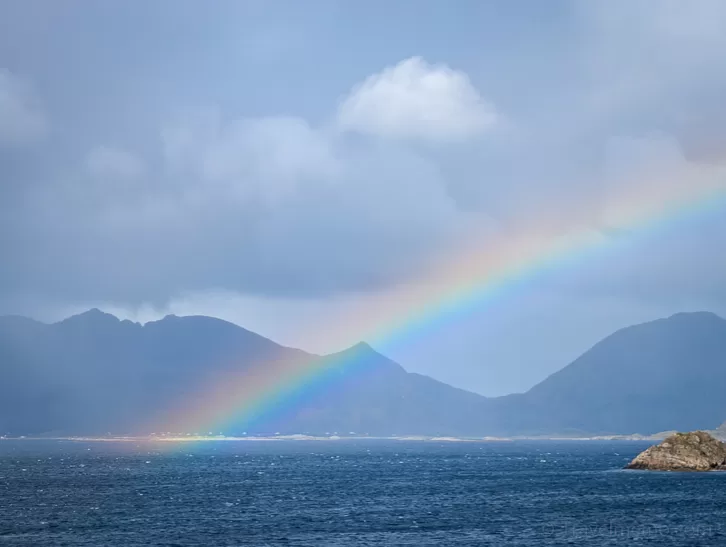
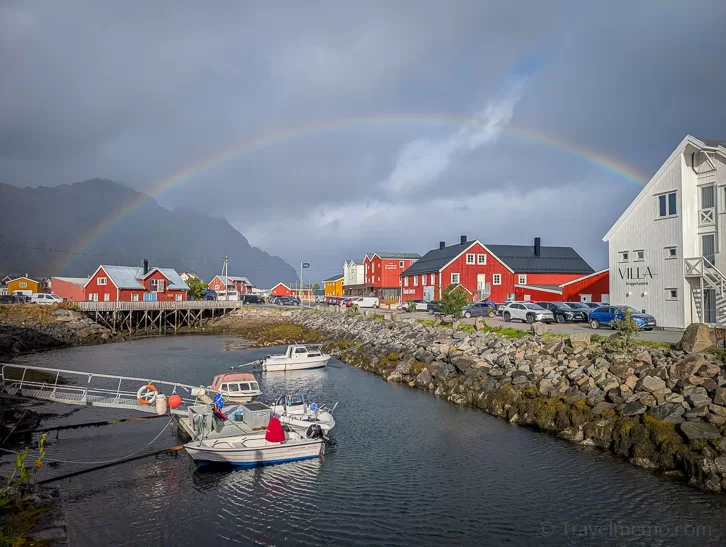
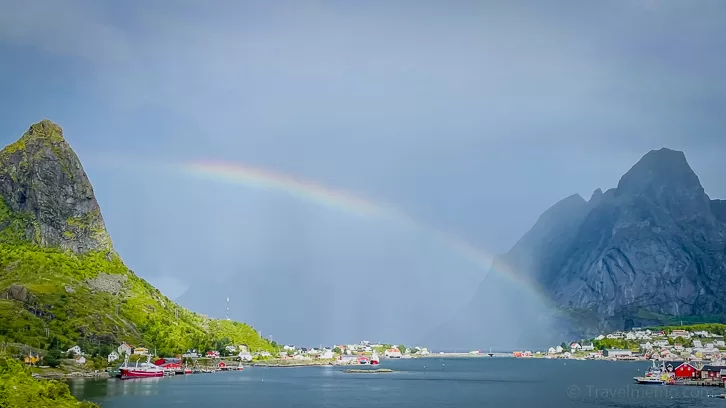
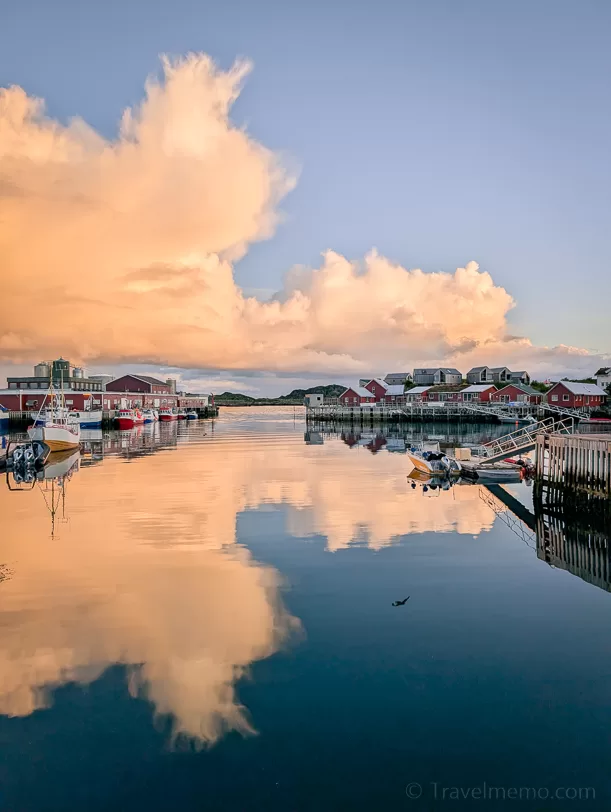
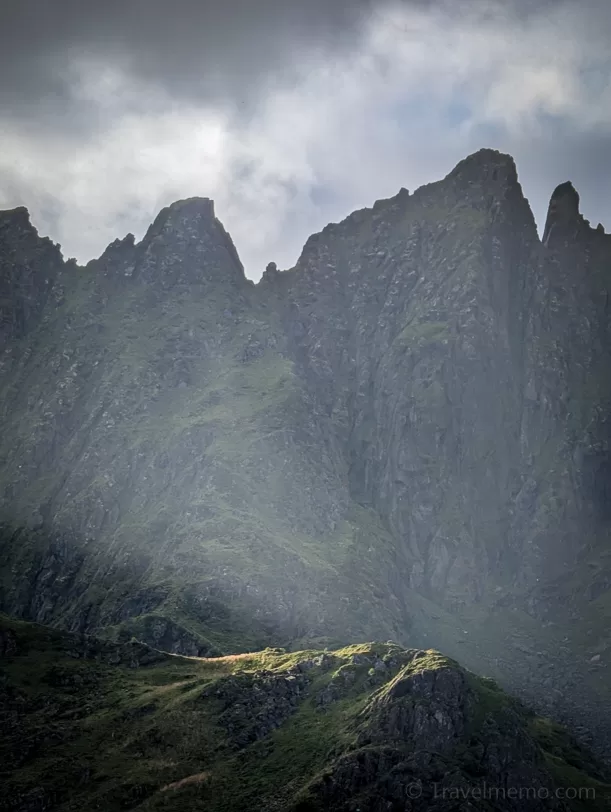
But whenever the cloud cover briefly opens up, it is simply magical: golden evening light, mirror-smooth fjords, and endless rainbows.
I’ve never seen so many rainbows in a week in my life!
Between hikes, charming fishing villages, delicious fish, and the spectacular Lofoten Links golf course, we experienced the Lofoten Islands in all their facets.
Table of contents Lofoten tips
Getting there: Fly to Evenes & rent a car
The closest airport is Evenes in Norway’s Nordland region.
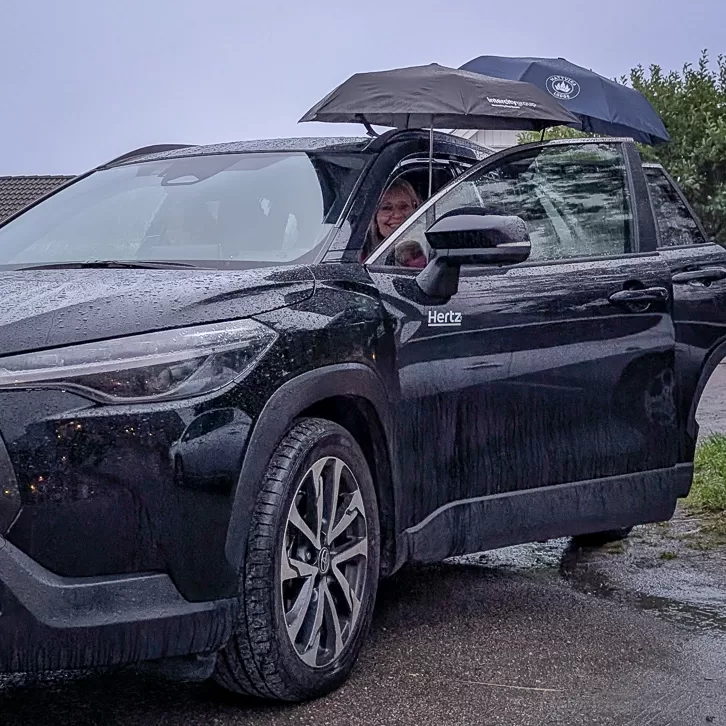
From the small airport in Evenes, we continue our journey in a rental car. Because believe me: without a car, you can’t get anywhere up here!
There are public buses, but you can only reach the most beautiful beaches, fjords, and viewpoints on your own four wheels.
The most important traffic artery in Lofoten is the E10. It runs like a red thread from northeast to southwest through the Nordland archipelago, connecting fishing villages, mountains, and beaches.
Even the drive along this road is an experience in itself (if you can see anything despite the clouds): behind every bend, there’s a new view of rugged cliffs, white sandy beaches, bold bridges, tunnels under the sea, or deep blue fjords.
Typical Lofoten: the picturesque fishing villages
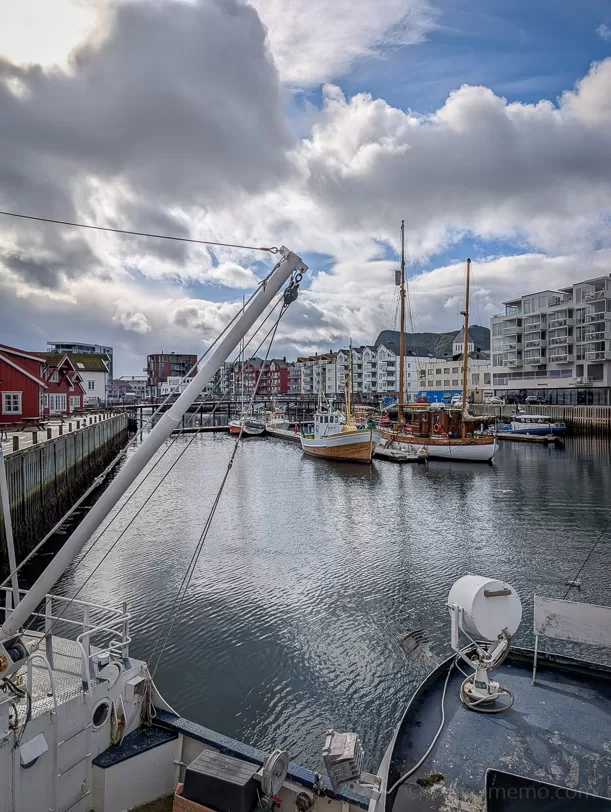
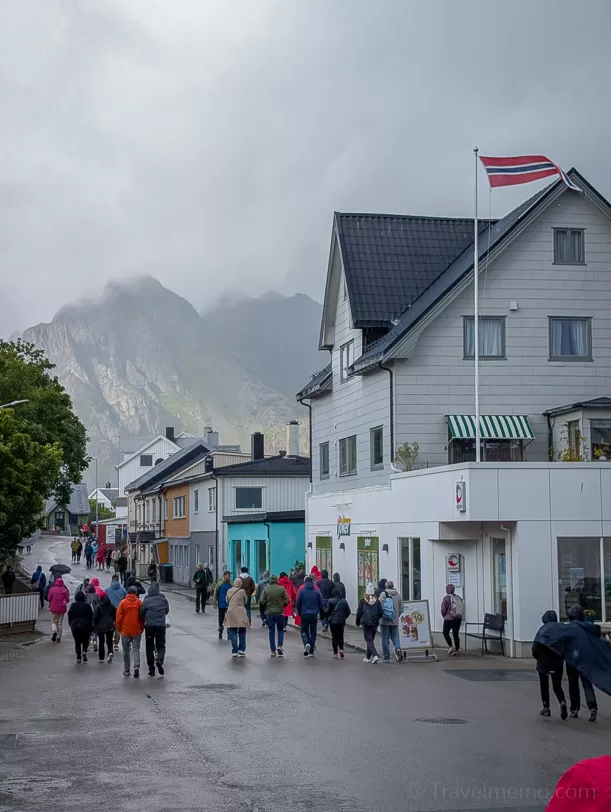
The Lofoten Islands are full of small towns that look like something out of a picture book—colorful houses, fishing boats in the harbor, and steep mountains in the background. Each town has its own charm.
When the sun breaks through briefly, the houses glow in all colors, but mostly in blood red (the traditional Rorbuer fishermen's huts were painted with whale blood).
By the third rainbow of the day, at the latest, you can't help but be amazed.
Svolvær – the capital of Lofoten
Svolvær is the capital of Lofoten and a hub for excursions.
If you haven't brought enough weatherproof clothing with you, you'll find what you need in the pro shops of the fishing stores: here, all rubberized, waterproof clothing is at least 5 millimeters thicker than what we have at home…
Many boat tours start in Svolvær, for example to the famous Trollfjord. As mentioned, weatherproof clothing is a must!
The brave venture up the local mountain Fløyfjellet and the Devil's Gate, the boulder wedged between two rocks.
Otherwise, however, the city doesn't have much to offer. But that doesn't stop Walter from finding a few nice snapshots.
Henningsvær
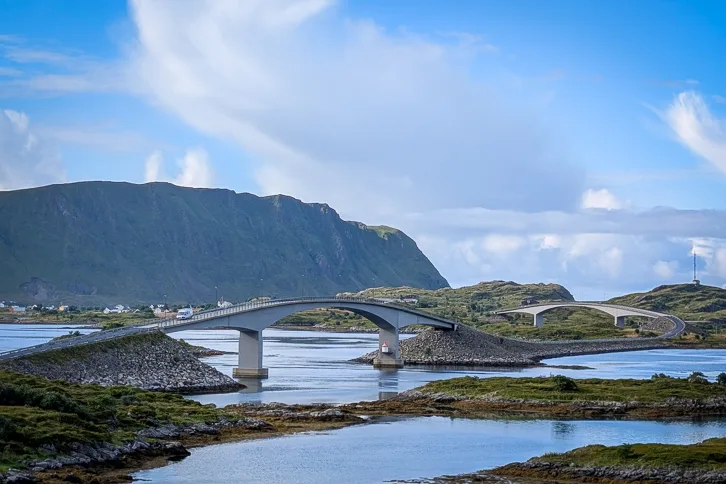
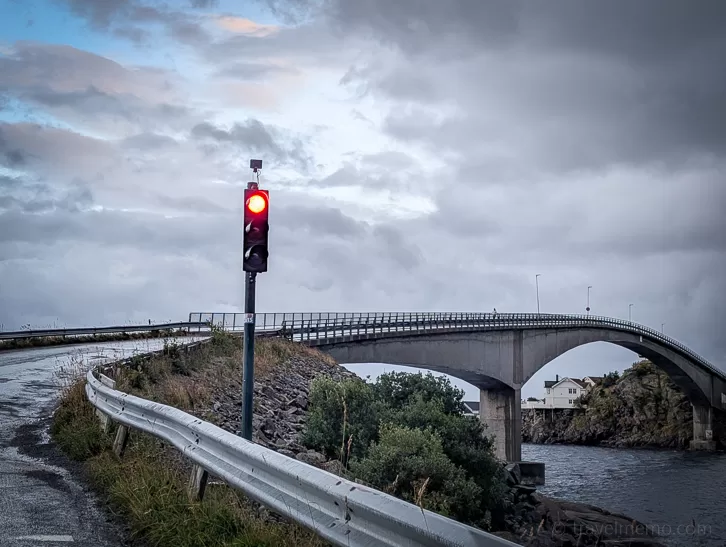
Our personal favorite is Henningsvær. The village is picturesquely situated on several small islands and connected by arched bridges – even the journey there is an experience.
That is, when the traffic light is green.
Henningsvær’s soccer field is particularly well known: it is spectacularly located between the sea and the rocks and is one of the most photographed in the world.
However, drones have the best perspective here; on foot, the artificial turf field doesn’t offer much.
Henningsvær also has an atmospheric glassblowing workshop and a lively café scene: small, lovingly decorated establishments with good cakes, coffee, and often a hip atmosphere.
We found the Trevarefabrikken, a former factory that now serves as a café, bar, concert venue, and cultural center, particularly charming.
Reine
The most famous postcard motif of the Lofoten Islands comes from Reine – red rorbuer (seasonal fishermen’s huts) stand on stilts in front of dramatic mountain peaks, reflected in crystal-clear water.
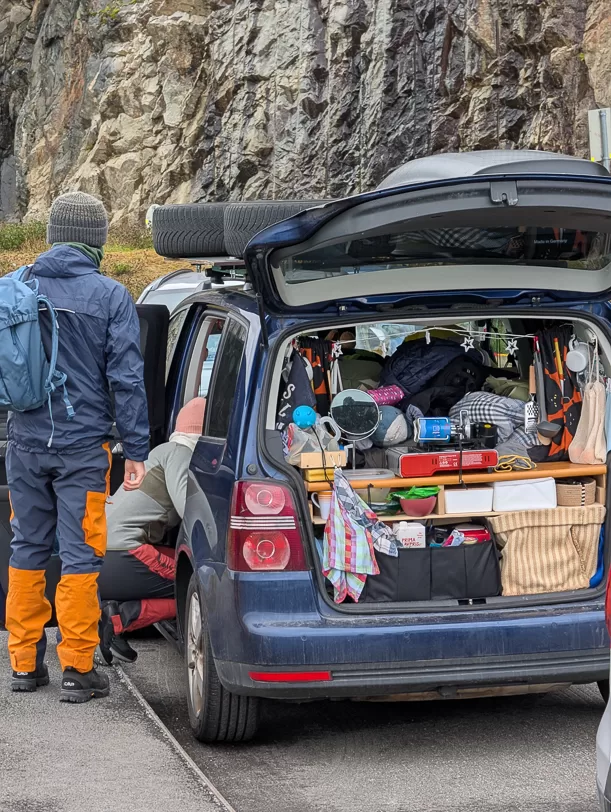
Reine is very touristy and doesn’t offer much – except for the parking lot for the nearby hike up the Reinebringen mountain, which offers great views.
The view would probably be stunning in good weather! …
Ballstad
Ballstad is less well known, but more authentic. The town still thrives on fishing and also has some really good restaurants (see tips below).
Here you can sense that life in Lofoten is not just for tourists.
Practical tips for fishing villages
- Parking: Parking spaces are scarce in popular places such as Reine and Henningsvær. If possible, arrive early in the day or park just outside or at the entrance to the village and walk to the center.
- Cafés: Many cafés close relatively early (often around 4 or 5 p.m.).
- Allow plenty of time: Even though the villages seem small, it's worth taking a stroll, popping into the little shops or simply watching the hustle and bustle in the harbor. With the wind often gusting, the huge seagulls perform spectacular dives here. What a life!
Hiking with a view
The Lofoten Islands are a hiker's paradise – but they are no longer an insider tip.
No matter where you hike, you're never alone. But the view more than makes up for it.
- Reinebringen: The most famous hike near Reine leads up to the local mountain, Reinebringen. Due to continuous rain (and mass migration!), we skipped it.
The crowds are enormous, and you quickly get stuck in traffic on the narrow path.
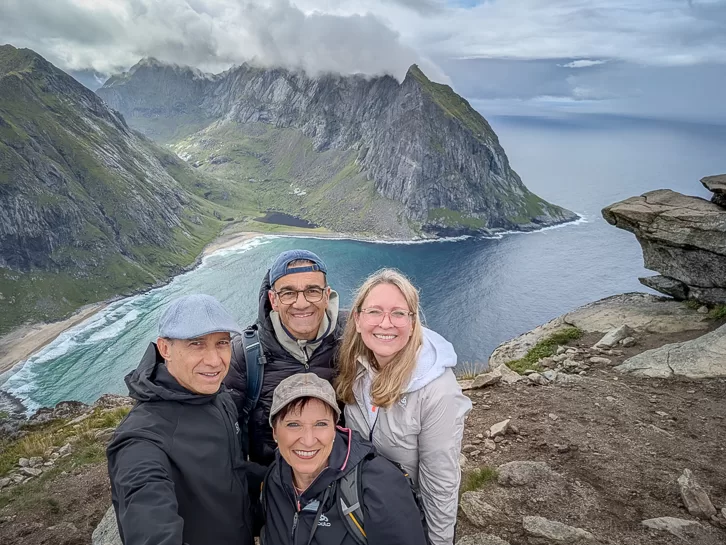
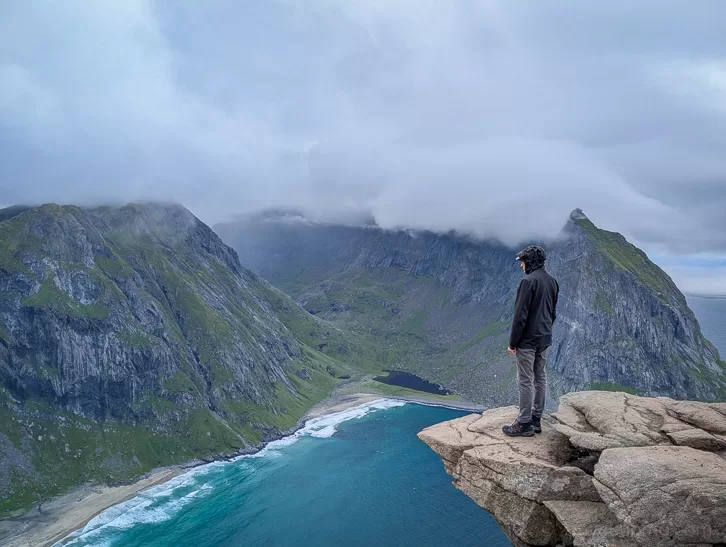
Ryten & Kvalvika Bay: The varied hike up Ryten with spectacular views of Kvalvika Bay is a must, even if you share the trail with many like-minded people.
The view from the famous rocky outcrop on Ryten of the turquoise shimmering Kvalvika Bay is simply magical.
Practical tips for hiking in Lofoten
- Parking & fees: Popular starting points such as Reinebringen or Ryten often have limited parking and few restrooms. Parking fees are also quite high. It's best to download the EasyPark app in advance.
Hiking boots: The trails are often steep, rocky, and very slippery when it rains. Good footwear is a must—sneakers are definitely not appropriate here! Although we see many people wearing them.
Clothing: The "onion principle" is recommended. The weather can change quickly – you should always have a rain jacket and windproof clothing handy.
Avoid crowds: It's less busy early in the morning or later in the afternoon. Many hikers start between 10 a.m. and 1 p.m. – if you're flexible with your time, you'll have the best chance of enjoying more peace and quiet.
Safety: Even if the trails are signposted, don't underestimate them! Caution is advised, especially in wet or foggy conditions, as the ridge often drops vertically into the depths! Checking the weather app (and turning back if necessary) can be invaluable.
Lofoten restaurant tips
Culinary-wise, the Lofoten Islands mainly have one thing to offer—fish. Almost every menu features stockfish (dried and rehydrated cod), halibut, fish soup, or whale stew. With potatoes.
Lamb is also frequently served. But to be honest, the cuisine isn't particularly varied – even when it comes to the fish of the day, we get halibut every time. It's delicious, but every day?
It's rather difficult for vegetarians, and if you have other dietary requirements, it's best to bring your own food.
Our restaurant recommendations
- Børsen Spiseri (Svolvær): Be sure to make a reservation! One of the best restaurants in Lofoten. Allegedly. We find it rustic and touristy.
- Maren Anna (Sørvågen): Traditional cuisine, top quality, good service. Very fine halibut. Go there if it's on your way.
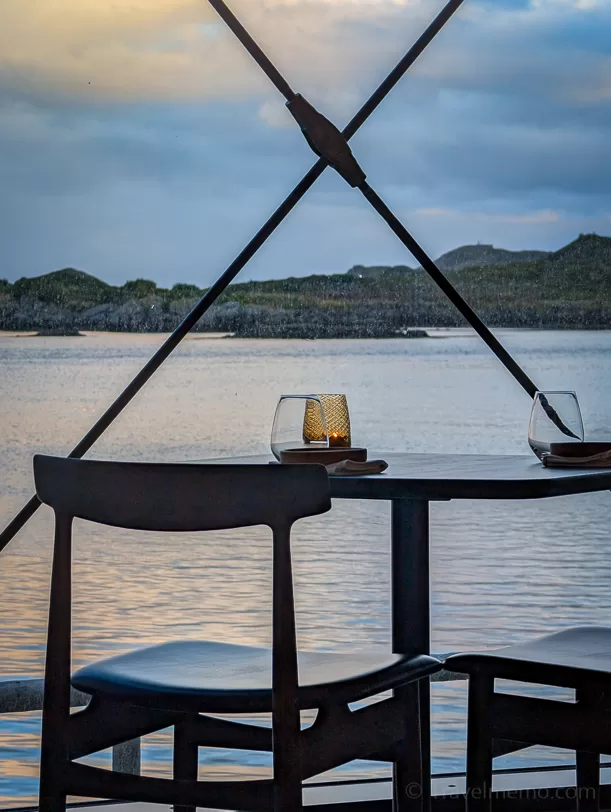
- Fangst (Hattvika Lodge, Ballstad): Fine dining restaurant, but still relaxed. Make a reservation, as it is a popular hotel restaurant.
- Solsiden Restaurant (Ballstad): Fresh and creative, located right on the pier.
- Heim Hemmingodden (Ballstad): Small, delicious, authentic.
Practical tips about restaurants
- Reservations: It is practically mandatory to make reservations in advance at popular locations and restaurants, especially during peak season.
- Meal times: Norwegians tend to eat early – many kitchens close around 9 p.m.
- Price level: Eating out in Norway is generally expensive, and the Lofoten Islands are no exception. But the quality is high and often freshly caught.
- Culinary expectations: Those looking for variety will be disappointed. Lofoten cuisine focuses heavily on a few types of fish and lamb. With lots of potatoes.
It is very difficult for vegetarians or vegans.
Lofoten excursion tips for inclement weather
The 3 museums of Lofoten
Rain is practically a daily occurrence in Lofoten. There isn't much you can do besides reading by the fireplace. But luckily, there are one or two exciting indoor alternatives:
- Stockfish Museum (in Å, pronounced "O"): Everything about dried cod and how it has shaped the region for centuries. It's fascinating how a simple product has had such a profound impact on life on the islands.
- Lofoten Seafood Center (in Leknes): From catch to plate – here you can learn everything about Norwegian farmed salmon. Very exciting and informative! Or did you know that each fish is individually vaccinated before it is transferred from the freshwater tank to the sea tank?
- Viking Museum (in Borg): History you can touch. In a reconstructed longhouse, you can immerse yourself in the world of the Vikings – complete with costumes and interactive stations.
At the Stockfish Museum in Å near Sørvågen
At the Lofoten Seafood Center in Leknes
At the Viking Museum in Borg
Lofoten Links - Golfing on the northernmost links course
A major highlight for Walter and me: the Lofoten Links golf course.
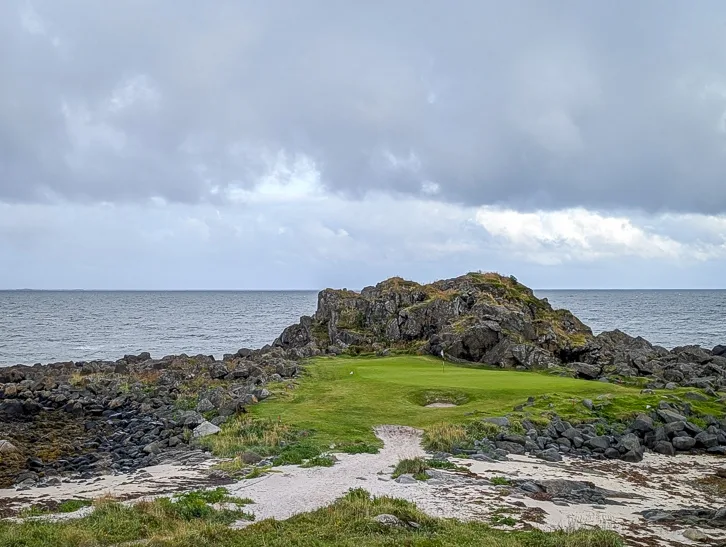
Located in Gimsøysand right by the sea, Lofoten Links offers spectacular views of the beach, mountains, and sea—a course that ranks among the most beautiful in the world.
We played the links course and were thrilled (golf courses right by the sea are called links because they "link" the sea with the hinterland via the dunes).
If only it hadn't been for my little accident… but that's another story. 😉
Practical tips for golfing at Lofoten Links
- Green fees: Playing on this course is not cheap—green fees are on the high side (approx. $140–180 per round). But the experience is worth every penny!
- Reservations: Be sure to book a tee time in advance, especially during the high season. Rental clubs and carts are also limited. However, a pull trolley will help you navigate the few inclines.
- Weather conditions: The course is directly exposed to the sea, so gusty winds are practically guaranteed. Rainproof clothing is a must. The locals play with a distinctive, thick Lofoten Links pointed cap.
Hotel tips for the Lofoten Islands
We tried out three different accommodations—all charming and with their own unique character.
Henningsvær Bryggehotell
Located in the heart of this lively fishing village, Henningsvær Bryggehotell is the perfect place to immerse yourself in harbor life.
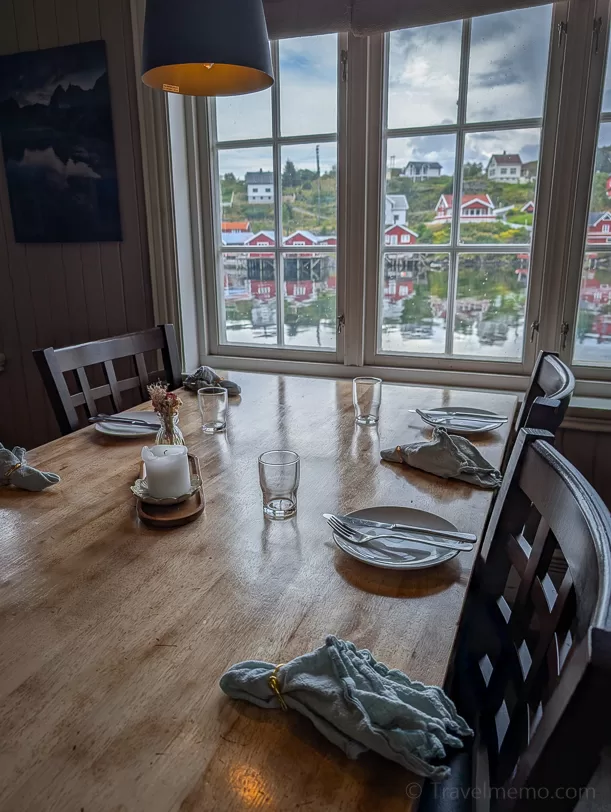
From the breakfast room, you have a direct view of the water.
In the evening, you are just a few steps away from the restaurants and bars of Henningsvær.
The Bryggehotell is the ideal place to start your trip to Lofoten.
Hattvika Lodge in Ballstad
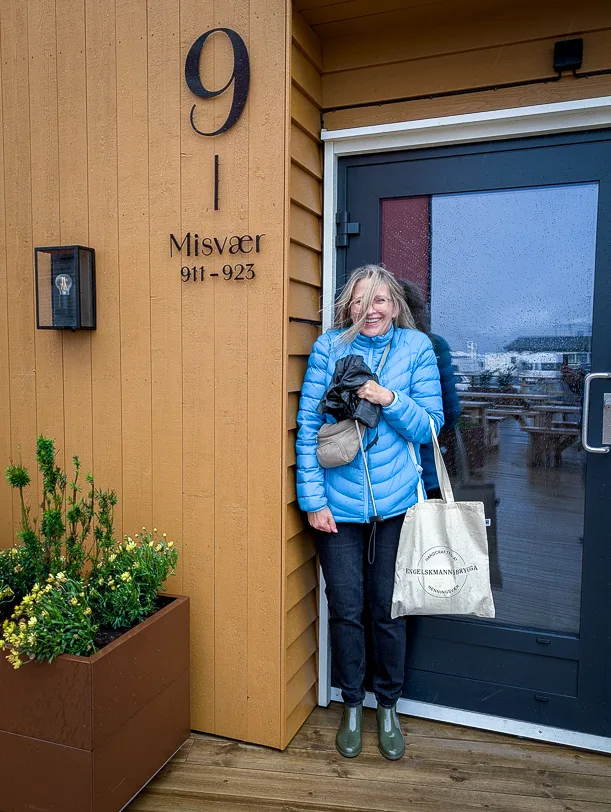
Here you can sleep in modern rorbuer (the typical red fishermen's cabins), which have been renovated with style and comfort in mind.
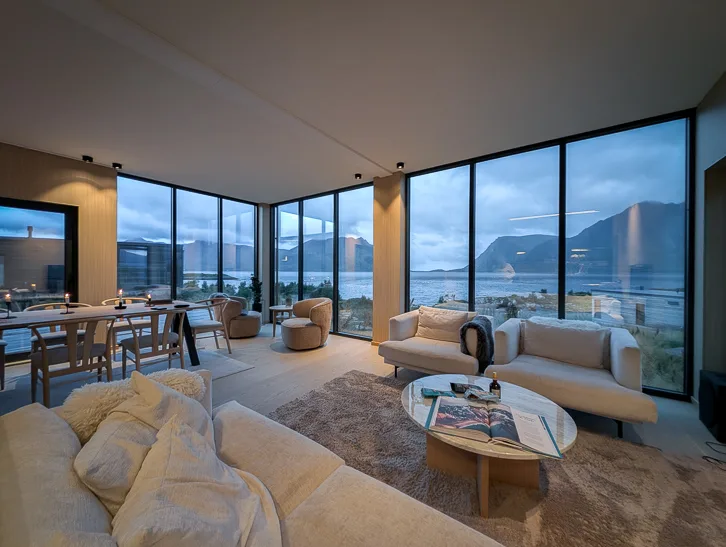
Or you can stay in the new, stylish lofts on stilts, the Hillside Suites.
Perfect for relaxing after a hike or a rainy day.
And dine at the adjacent fine dining restaurant, Fangst.
Northern Cabin Retreat in Lyngvær
To conclude our trip, we consciously decide to seek peace and seclusion.
The spacious lofts at Northern Cabin Retreat are tastefully furnished and surrounded by nature—the perfect place to take a deep breath before returning to civilization.
Here, we felt like we could truly “switch off.”
Our conclusion on the Lofoten Islands
Yes, the weather in Lofoten is changeable. Lots of rain, lots of clouds—but also those brief, incredibly beautiful moments of sunshine that bathe everything in magical light. Plus endless rainbows.
The Lofoten Islands are not for fair-weather seekers, but if you love nature, rugged coastlines, and Nordic flair, you'll love it here.
From January to April, there is a strong smell of cod throughout the country because the stockfish is dried on poles in the fresh air.
And be aware: especially during the peak season in summer and before and after, there are a lot of tourists here!
Overtourism is not an empty phrase here… Despite it being the off-season, we were sometimes unable to drive to the parking lots at viewpoints: all the parking spaces were taken and even the entrance to the parking lot itself was blocked!
The tourist infrastructure couldn't keep up with the trend of tourism at all.
But when the sun comes out, it's still beautiful here…