Is Costa Rica the Switzerland of Central America?
Costa Rica is said to be the Switzerland of Central America. But why, exactly?
I went looking for answers on the ground.
Presumably what people mean by “Costa Rica – La Suiza centroamericana” is the lush green landscape, the relative prosperity, the neutrality, and the mountainous terrain.
Landscape and Nature
Mountains and Volcanoes
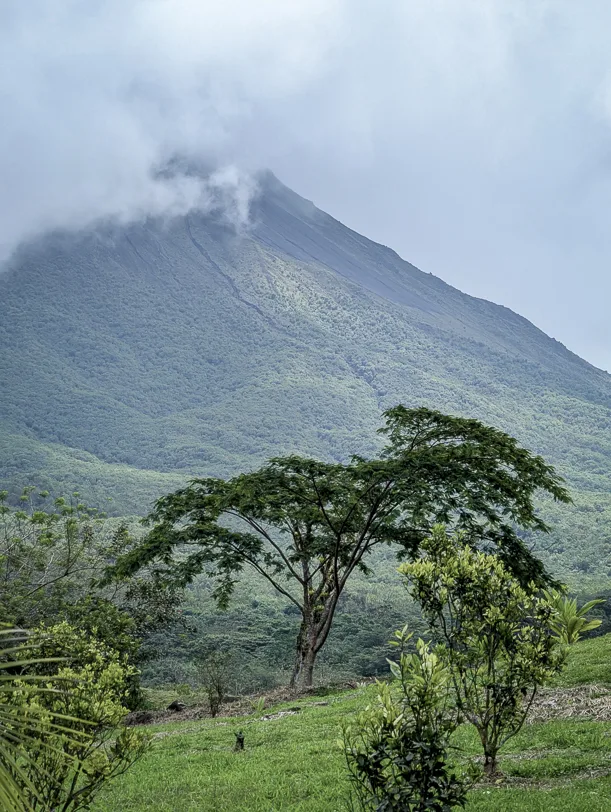
Costa Rica has gorgeous volcanoes, like Arenal and Tenorio.
Switzerland has the majestic Matterhorn. Plus the Eiger, Mönch and Jungfrau. Inimitable, of course. No comparison there.
At the foot of its volcanoes, Costa Rica has a range of hot springs.
Switzerland has the Therme Vals and Bad Ragaz, and many more.
But I don’t think that’s where the comparison comes from either.
Flora and Fauna
Switzerland’s national critter is the cow. Without cows, our landscape would be nothing.
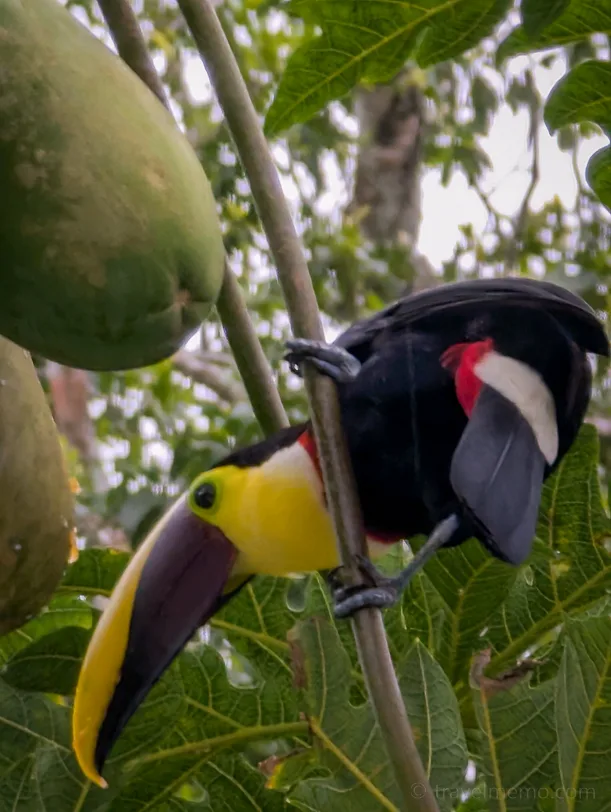
Costa Rica has cows standing around too, but it’s the toucan that really stands as the country’s symbol.
Sure, Swiss cows are far bigger than Costa Rica’s toucan, and they give more milk, but when it comes to the exotic and the colorful, the toucan is way out in front.
So that’s not where the comparison comes from either.
Switzerland’s national flower is the edelweiss.
Costa Rica’s national flower is the Guaria Morada, a purple orchid.
Both grow in the mountains, both are rare – but on sheer color, Costa Rica wins again.
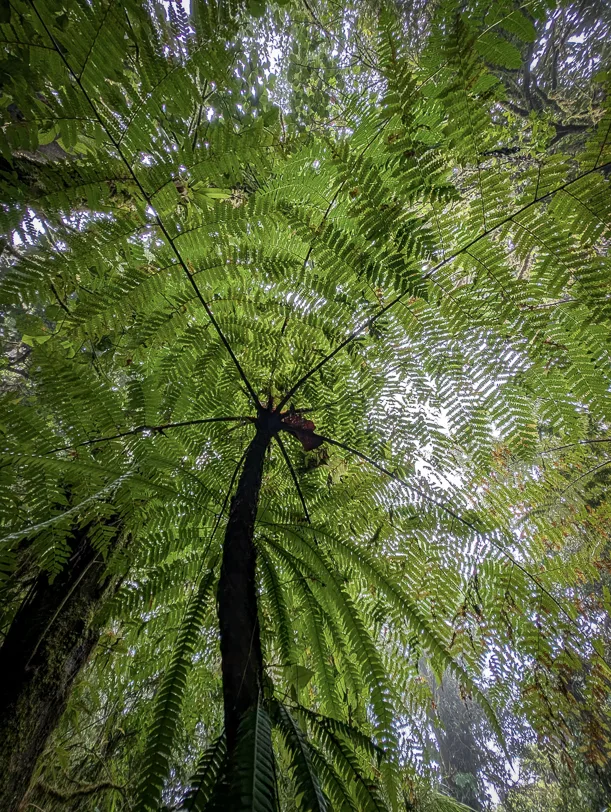
In both countries, all that rain keeps everything insanely green.
In Costa Rica that produces no fewer than four different types of forest: tropical rainforest, cloud forest, tropical dry forest (where the trees shed their leaves in summer!) and mangrove forest.
Switzerland’s four forest types – deciduous, coniferous, mixed and riparian – are, of course, no comparison.
But come on – if the comparison came from the greenery, then Ireland or New Zealand would be known as Swiss lookalikes too, wouldn’t they?
But they’re not.
Climate
Switzerland: 4 seasons. Used to be. Thanks to global warming, winter increasingly feels like autumn or spring. Though just recently, at the very last minute, a meter of snow did still fall.
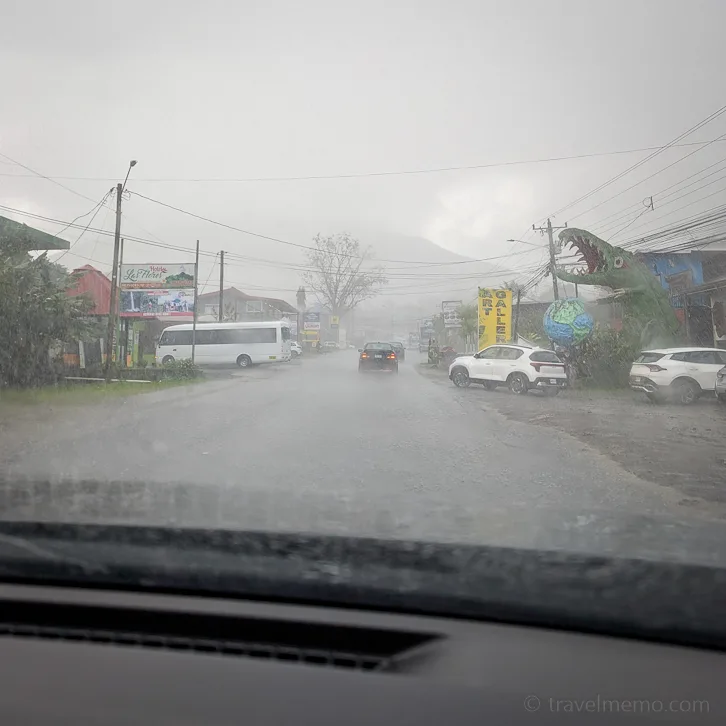
Costa Rica: 2 seasons. Dry season in summer, rainy season in winter. Used to be. During our visit, it rains on us for days even in the dry season.
When it rains in Costa Rica, power outages are par for the course. Which is why restaurants cook with gas “just to be safe.”
Beyond the fact that both countries are green like crazy, the differences strike me as pretty substantial.
Food and Drink
Dishes and Chefs
We Swiss eat fondue, bratwurst with rösti, and we get cooked for by Andreas Caminada at Schloss Schauenstein or by Silvio Germann at the Mammertsberg.
The Ticos eat corn, rice with beans, and their chefs cook in San José:
| Restaurant | Chef / Concept | What makes it special |
|---|---|---|
| Sikwa | Pablo Bonilla | First Costa Rican restaurant on the “Latin America’s 50 Best Restaurants” list. Indigenous ingredients and techniques, reimagined. |
| Silvestre | Santiago Fernández Benedetto | Restored 1890 villa in Barrio Amón. 7-course “Soul” tasting menu. |
| El Taller de Billy Sazón | Billy Sazón | Just 10 seats. 12-course “Tradition” tasting menu. |
| DOMA | — | Restored 1945 house in Barrio Escalante. Produce from Costa Rica’s volcanoes and mountains. |
| Amana | San Pellegrino Young Chef 2024 finalist | 7-course tasting menu (Thu-Sat). Local ingredients, global techniques. |
You can guess it: the comparison probably doesn’t come from the cuisine either.
Chocolate
Swiss chocolate is world-famous, mainly thanks to brand ambassador Roger Federer. But it’s based on imported cacao beans. And Swiss cow’s milk, of course.
Costa Rica’s tasty dark chocolate, high in cacao and locally produced, was news to me. Then again, I can’t name a single Costa Rican tennis player…
Coffee
Switzerland: top-tier coffee thanks to global imports, high-tech roasteries, well-trained baristas and Cimbali machines.
Costa Rica: its own coffee beans, well-trained staff. Sometimes stupendously fine coffee, though sometimes a touch too bitter for me.
No, the comparison can’t come from “coffee nation Switzerland” either.
Tourist Infrastructure
Transport
We Swiss have a thing for rails: railways, cog railways, trains like the “Glacier Express” or “Bernina Express,” cable cars, funiculars, lake steamers like the “Blümlisalp,” the A1, A2, A3 motorways and so on.
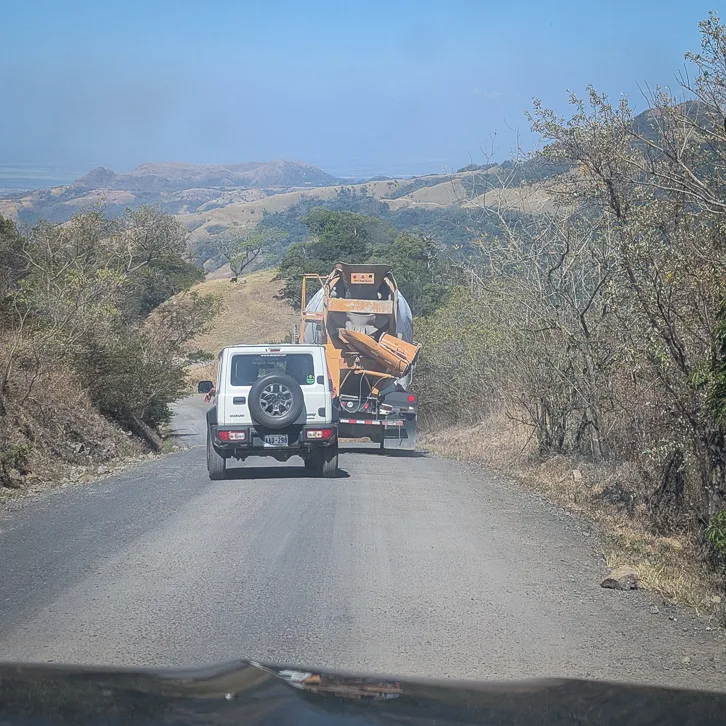
Costa Rica has buses and trucks. And rental cars for tourists. And gravel roads, lots of gravel roads.
Which is why transfers take forever: few motorways, narrow country lanes, and the moment a heavy truck with belching exhaust pipes wheezes its way up an incline, long columns of impatient SUV drivers pile up behind it.
The comparison definitely doesn’t come from the transport.
Beaches
Switzerland has the beach at Yvonand on Lake Neuchâtel and the Mythenquai lido on Lake Zurich.
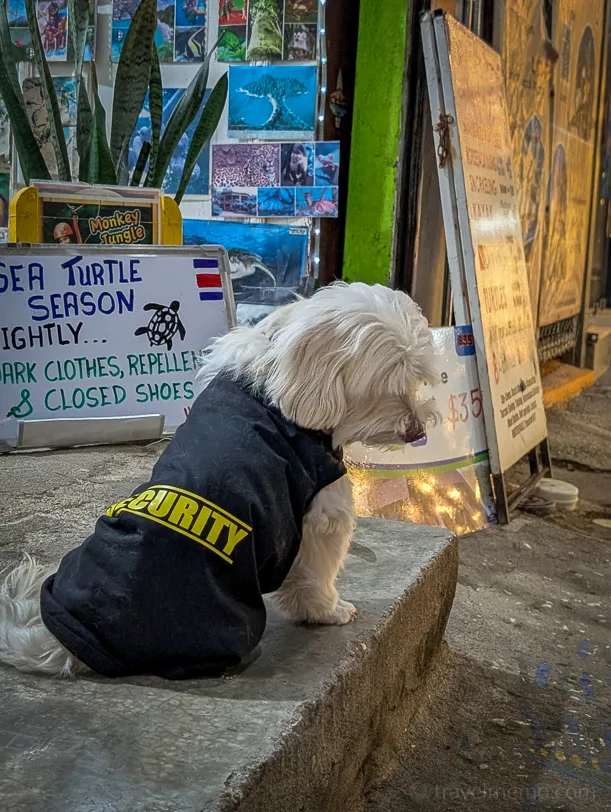
Costa Rica has miles of sandy beaches on both the Pacific and the Atlantic. Landing spots for sea turtles included.
The comparison clearly isn’t down to the beaches.
Society and Politics
Size and Population
In Costa Rica, big families with up to 20 children aren’t unusual. Probably because of the regular power outages.
In Switzerland, three kids is enough to keep you perpetually on the brink of personal bankruptcy.
And yet: on roughly the same land area, Switzerland counts nearly twice as many inhabitants. So math isn’t what connects us.
Education
Costa Rica has 64 universities. Seriously!
That’s turned the country into an education hub for North and South America — IBM, Roche, Amazon and many more don’t settle here without good reason.
Switzerland holds its own with ETH Zurich, EPFL and the University of St. Gallen, plus universities of applied sciences and a dual education system. Not bad either, and prized by plenty of companies.
But for all the education on both sides, practically nobody knows how educated the other one is.
Purchasing Power and Currency
The restaurant prices read just like home: Costa Rica is as expensive as Switzerland.
Glancing at the menu, a Swiss visitor isn’t surprised: “Ah, the prices are perfectly normal.”
It only gets uncomfortable when the bill arrives, with those already “normally” high prices plus a service charge and value-added tax adding up to an extra 23%.
Perceived Safety
The most dangerous thing we Swiss can muster is the Langstrasse in Zurich. And by international standards that’s pretty harmless.
In San José, you’re warned to be careful at every turn. Since the sights there don’t appeal to us anyway, we don’t put it to the test in person and head straight for the rainforest instead.
There you’ll find all sorts of dangerous things – jaguars, snakes, spiders, caimans and green poison-dart frogs with red feet. But thanks to our guides, the safety situation always feels relaxed to us.
On the safety front, the comparison isn’t too far off – at least as long as you steer clear of San José.
Abolishing the Army
Costa Rica abolished its army. In 1948.
The reason is surprisingly pragmatic: to keep its own army from staging a coup and undermining democracy, the way it happened in numerous neighboring Central and South American countries.
A tip for Switzerland’s anti-army campaigners: in Costa Rica, it was apparently the right argument that won the day. Not pacifism, but coup prevention.
And here, all of a sudden, the comparison holds: two neutral small states that stay out of it. Except that Costa Rica is more consistent about it than we are.
My Verdict
The comparison limps badly – except on one point: neutrality. And there, Costa Rica is even more consistent than Switzerland.
Otherwise? Two small countries with lots of greenery, hilly landscapes, drinking water straight from the tap and prohibitively expensive restaurants. That’s about the extent of the parallels.
As a Swiss visitor, the trip is worth it all the same – precisely because everything is so different. Which is fitting, given that the way they speak down there is, well, all Spanish to me…