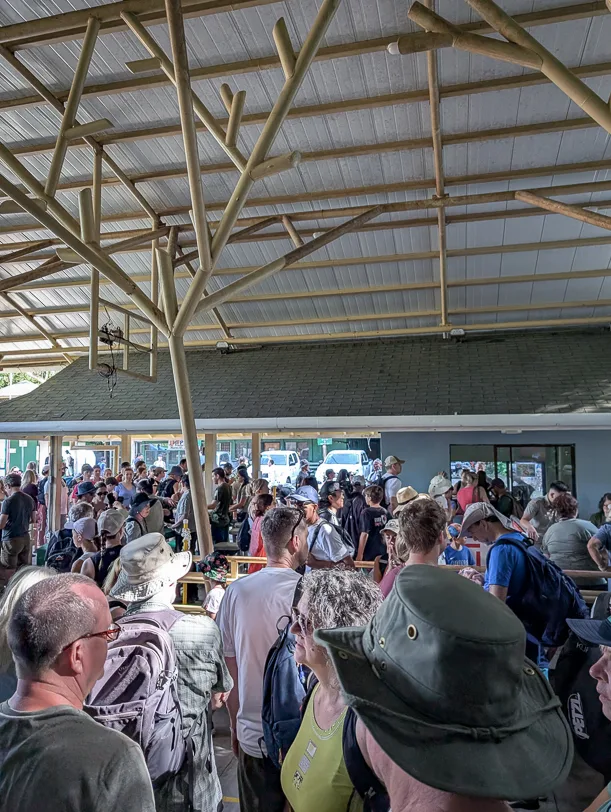
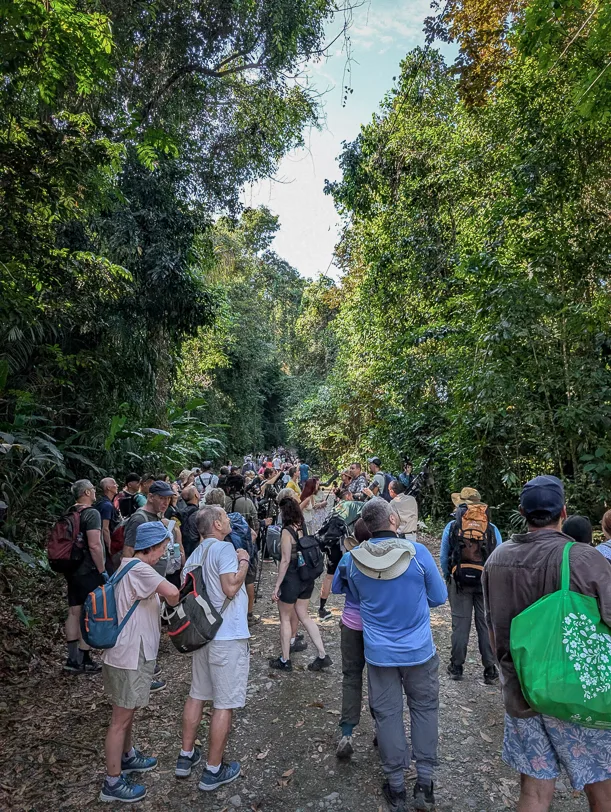
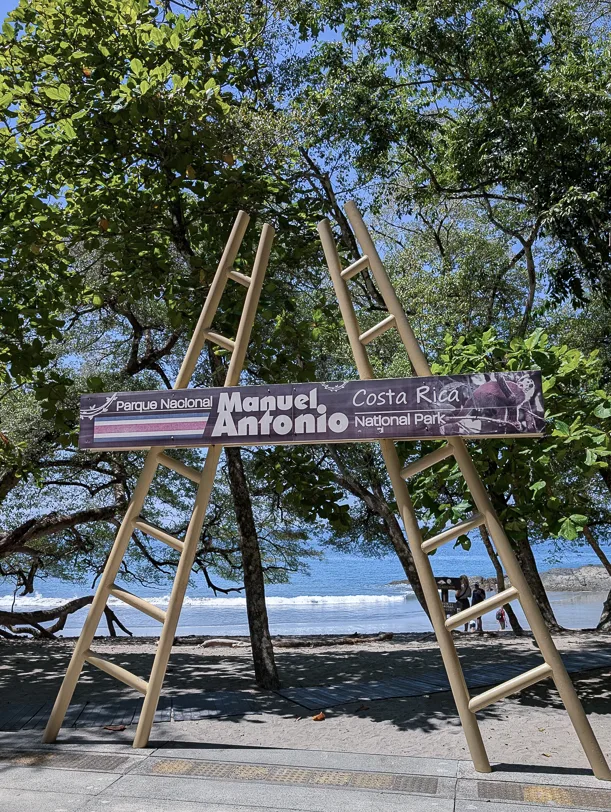
First impression of Manuel Antonio? Lots of bustle, lots of people, lots of guides, lots of expectation.
Manuel Antonio National Park feels like a tightly scheduled nature experience.
Just before the entrance to Manuel Antonio National Park, something happens that sets the tone for the whole visit.
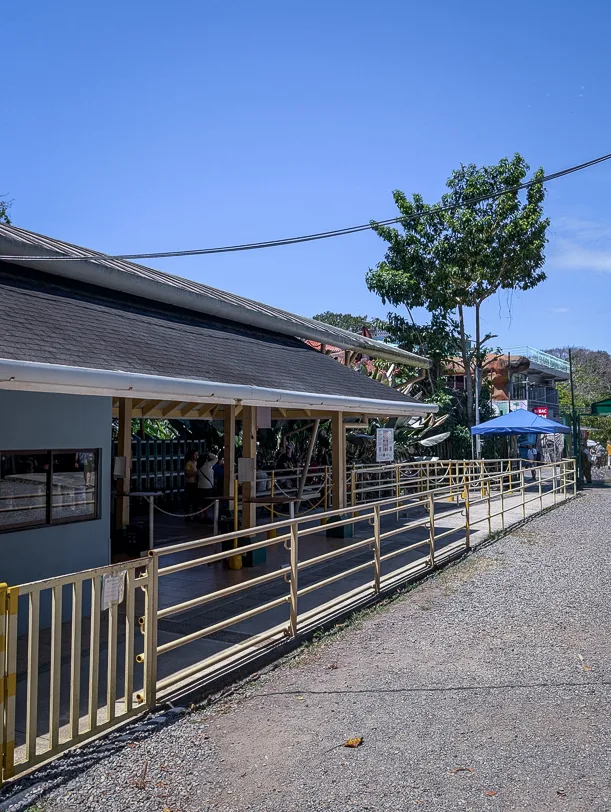
Out on the road, guides intercept you. Self-assured, loud, persuasive. Their message is unmistakable: you supposedly can’t get into the park without a guide.
That isn’t actually true.
But in that moment we let ourselves be intimidated – and book one of the pushy fellows.
What follows? Walter and I see that differently.
Manuel Antonio National Park: Arriving & Planning
Before you even think about those guides, you should have a ticket, because Manuel Antonio National Park is one of Costa Rica’s most-visited nature reserves – and the number of visitors is strictly capped.
Just showing up on a whim barely works. So I book our entry tickets in advance through the official SINAC platform (Sistema Nacional de Áreas de Conservación).
Tickets are sold exclusively there. Other websites are resellers and charge extra fees accordingly.
Practical info at a glance:
- Park hours: 7:00 a.m. – 4:00 p.m.
- The park is closed on Tuesdays
- Hotel base: the nearest town is Quepos, about 7 km (4 mi) away. We stay at the adults-only hotel Makanda by the Sea
- Going (very) early in the morning pays off: fewer crowds, more pleasant temperatures, more animal activity
- Not long after, the crowds are huge; by midday everyone has already left again
With or Without a Guide? Our Take
Back to the guides out on the road: we let ourselves be talked into it. What happens next is surprisingly good – and at the same time unnecessary.
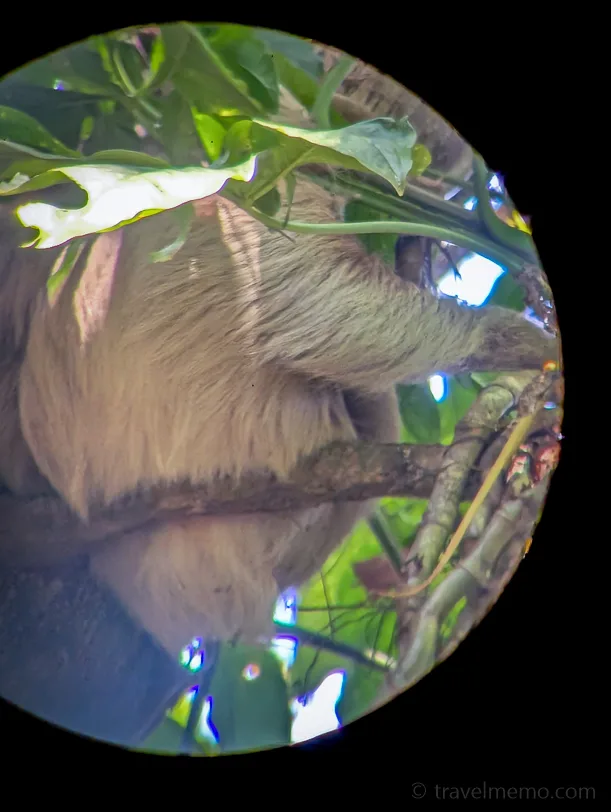
Sure, our guide spots several animals we’d never have seen on our own. A sloth high up in a tree, perfectly camouflaged. Small details like spiders or crabs that suddenly become visible.
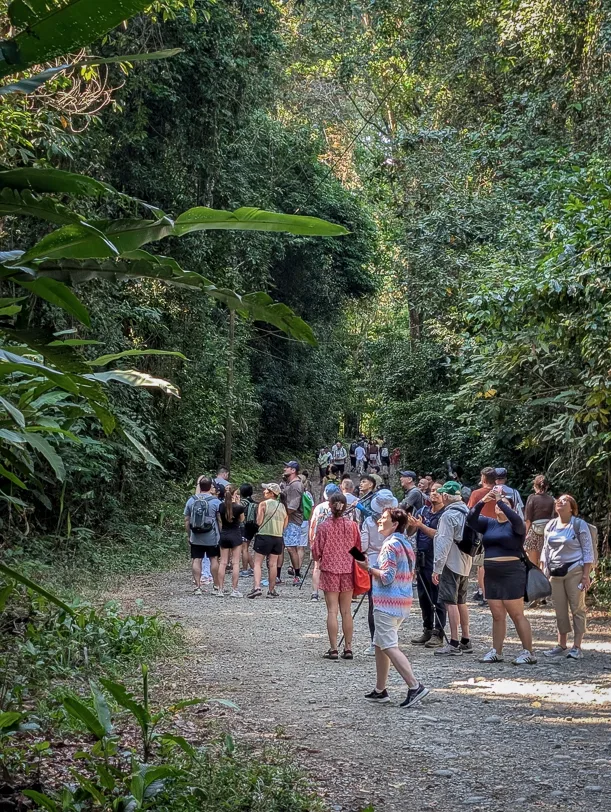
But at the same time we quickly notice: the park is so busy that you can easily take your cues from the groups standing around: where people are looking up, there’s usually something to see. Or, well, sometimes not … and you just ask what everyone else sees and you don’t.
Our tip:
- If you want maximum wildlife sightings and to learn something about the animals’ quirks: a guide is worth it, and you’re supporting local jobs. But book one in advance, not on the road out front (those guys want cash rather than credit-card payment).
- If you want to take it easy and go on your own: that works without a hitch too. Just follow the other visitors. Though how relaxed that really is, given the crowds…
- The “wild” guides do offer one advantage at least: they provide a guarded parking lot right around the corner from the park entrance.
- Adjoining the park there are sandy beaches and a short loop hike (about 1 hour) to the heavily forested headland of Cathedral Point. Here you’ll see more monkeys than earlier in the park, and the guides don’t come along. Here you’re more likely to be out in quiet nature.
In the Park: Watching Rather Than Hiking
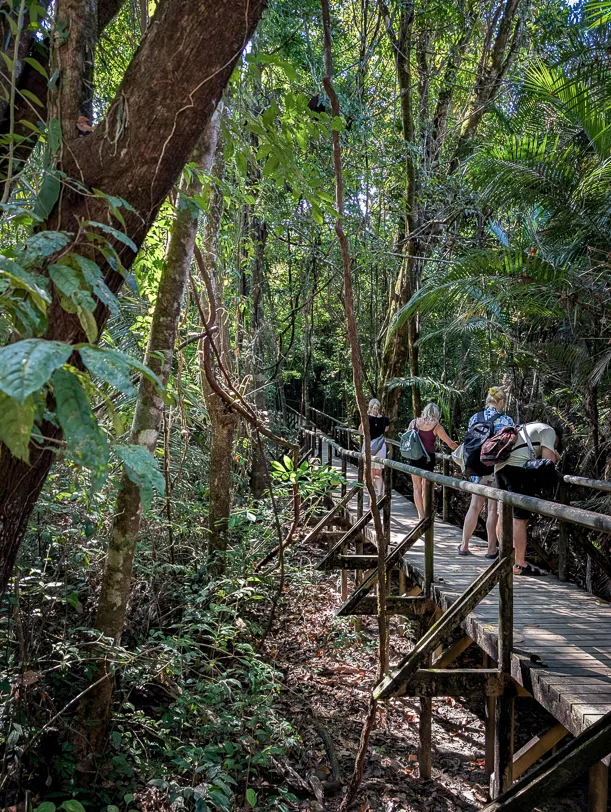
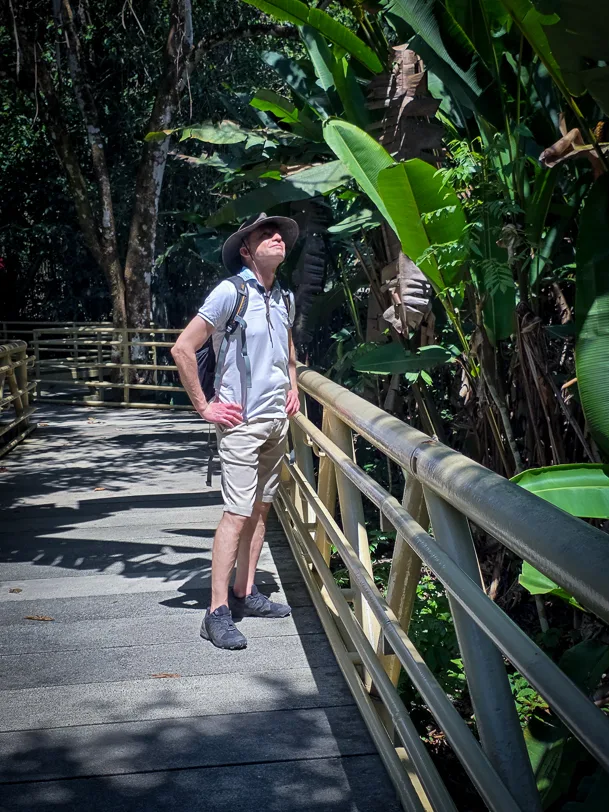
Manuel Antonio is not a hiking park. You’ll get through just fine in simple footwear.
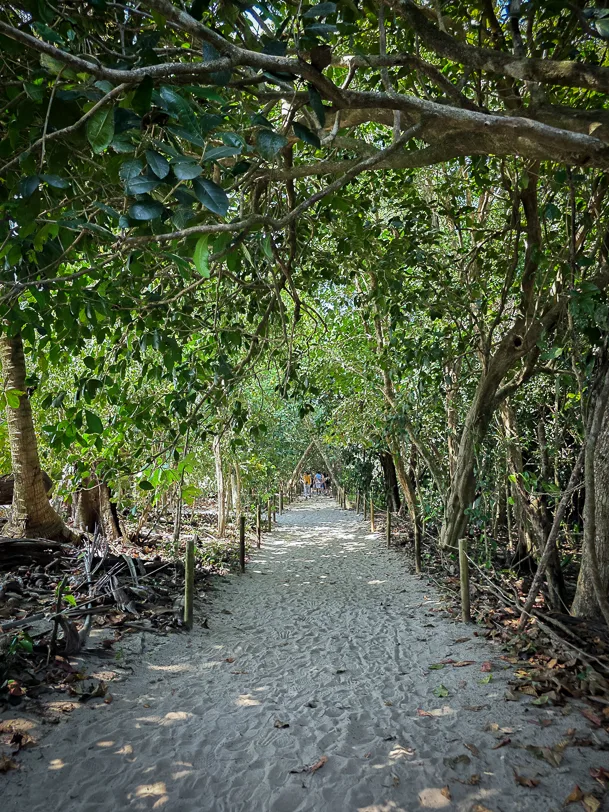
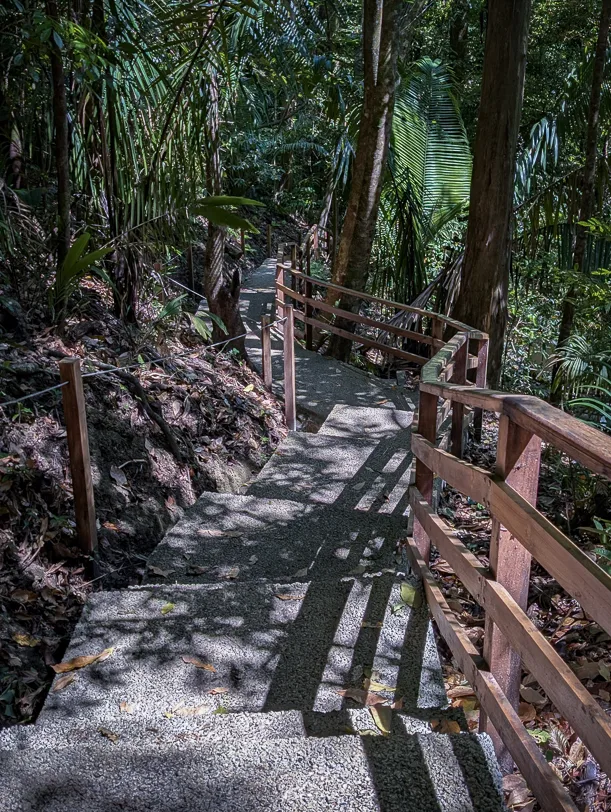
The paths are short, well built and quickly done. The watching is all about the canopy, the path’s edge, the shallow water.
Not all that much happens.
Again and again people stop, look up, point into the trees. Those are exactly your moments to spot something too. Usually it takes a few seconds before you make out the animal.
Animals Up Close – and Sometimes Too Close
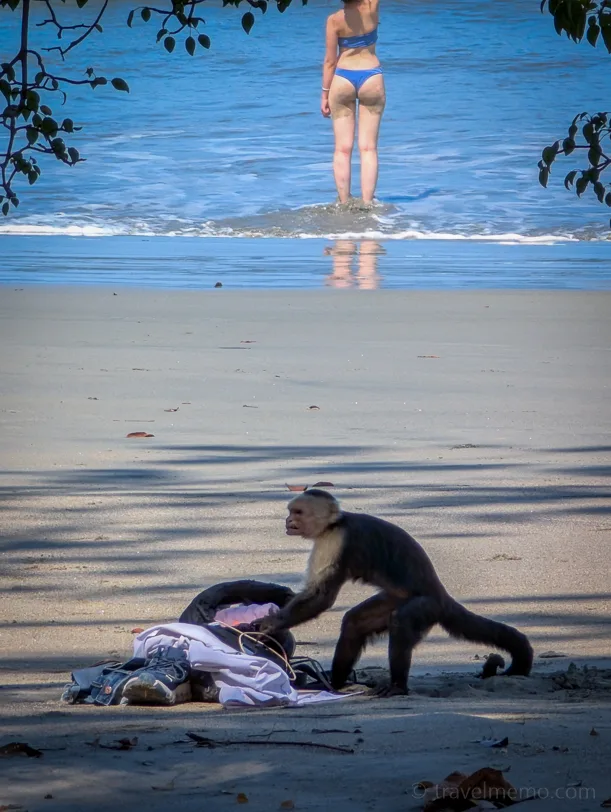
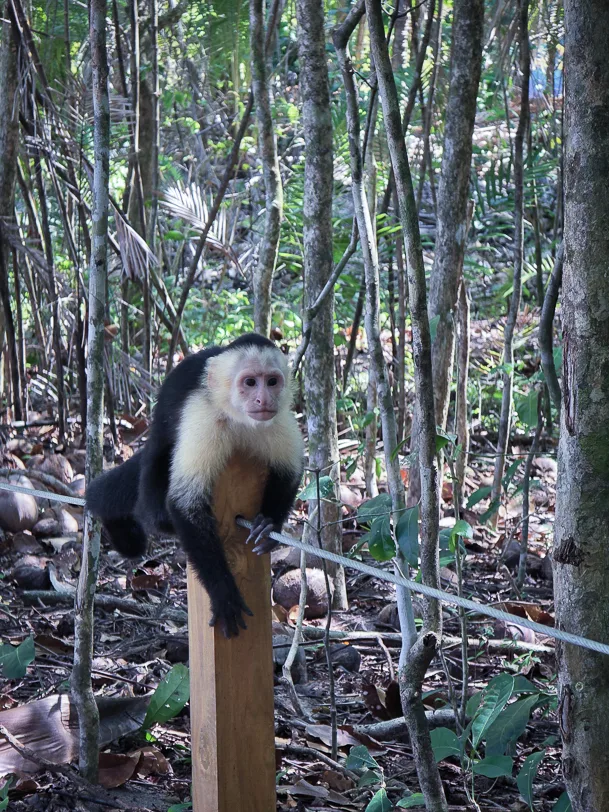
Capuchin monkeys are among the most frequently seen animals. And they’re every bit as cheeky as their reputation promises. They know what a backpack is and what all might be inside it.
Even though: bringing food into the park is not permitted. But the animals don’t know that!
So never leave your backpack unattended. The monkeys are faster and nimbler than you think, that’s for sure.
Sloths you’ll see if you know where to look. Or if you have a guide along who knows. Because he’s probably already seen that same sloth the day before in the same spot…
They hang motionless like a ball of fur in the upper branches and look like part of the tree.
Cathedral Point: The Detour Is Worth It
Anyone who only strolls through the park and then lies on the beach misses one of the most beautiful stretches.
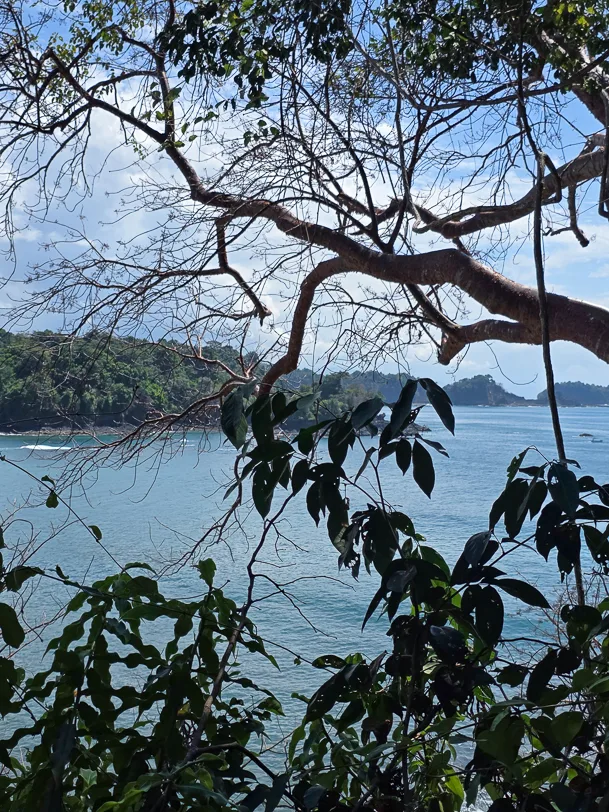
The loop hike to Cathedral Point (Punta Catedral) leads through dense tropical rainforest onto a peninsula between two beaches.
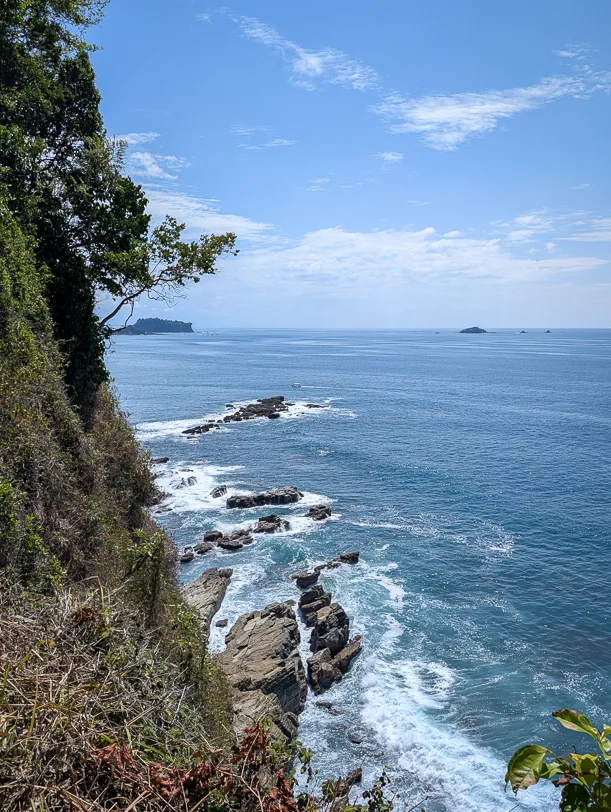
The path is short but striking: moss-covered trees, views out to sea, quiet away from the main trails.
For me, this is the real highlight of the park.
The Beaches: Jungle Meets the Pacific
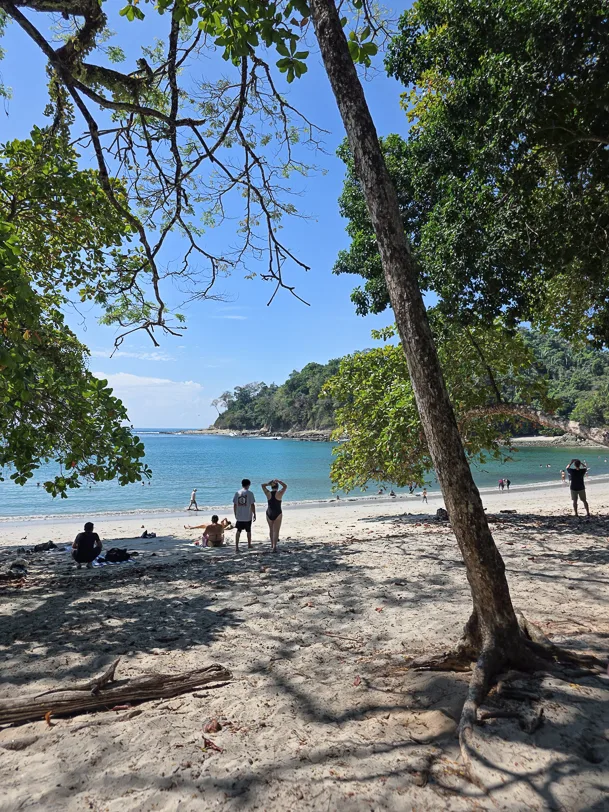
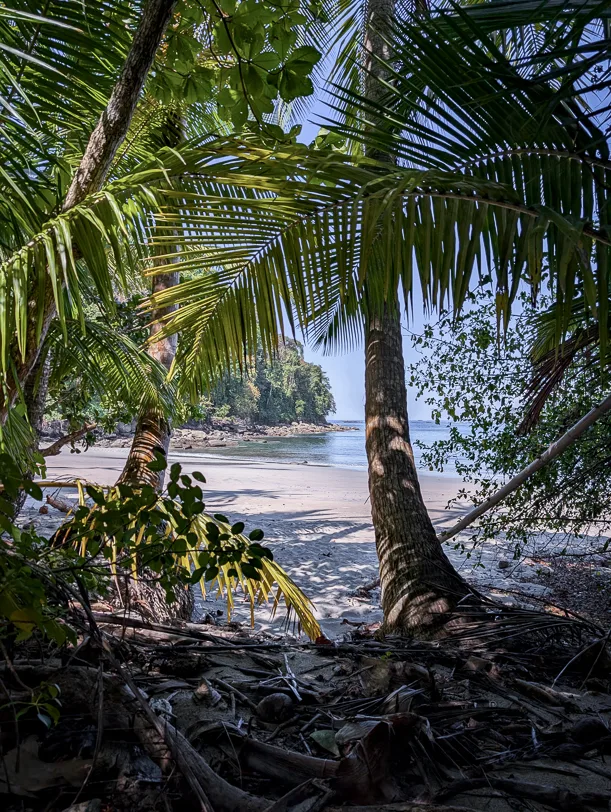
Fine sand, turquoise water and rainforest right behind it. You wade into the sea, turn around and see palms, lianas, jungle. A place that feels almost unreal.
The two main beaches in the park – Playa Manuel Antonio and Playa Espadilla Sur – are gorgeous and surprisingly uncrowded.
Tip: Take your time for the beaches. This very contrast is what makes it special.
Verdict: Is Manuel Antonio National Park Worth It?
This is where our opinions diverge. And we think that deserves an honest answer.
Walter leaves the park disappointed and advises against a visit.
He had expected more: more wilderness, more untouched nature, more animals, less hubbub.
The park is beautiful, no question. But the experience falls short of the expectations its grand name raises. Other Costa Rican national parks like the Monteverde cloud forest are far more appealing and less crowded.
I (Katja) find the park lovely – precisely because of the beach and the loop hike to Cathedral Point.
The combination of jungle trail and swimming beach is rare. And the cheeky but genuinely funny little capuchin monkeys won me over.
Manuel Antonio is well visited and clearly developed; you can’t get lost.
If you’re in the park early (or only after the rush, from around 11 a.m.) and give yourself time for the beaches and Cathedral Point, the park shows you exactly what Costa Rica is famous for.
Just: don’t expect lonely wilderness. Expect an easily accessible, honest nature experience – with rainforest, monkeys and the Pacific.
This article is part of our Costa Rica road trip along the Pacific coast.